Showing posts with label ventral striatum. Show all posts

Wednesday, May 8, 2019

Rewards and Risk-Taking in Adolescence

by Lauren Graf, Neuroscience major, Kenyon College Class of 2020

In this blog post I have decided to discuss motivational systems, including risks and rewards, in adolescence. This post is based off of an annotated bibliography in which I looked at articles that focused on these motivational systems. The topic is one of major interest, as everyone goes through adolescence and may experience these changes in their lives. 


Article 1:

Galván begins by defining adolescence as a time period during which individuals exhibit more risk-taking behavior and have heightened reward sensitivity while also developing social, physical, and cognitive skills needed for independence. She mentions how this increased risk-taking and heightened reward sensitivity may actually be beneficial in helping adolescents learn from novel experiences in order to become more independent. She then also defines reward sensitivity as increased motivation to obtain rewards and an increased response to the rewards. It is not hormones alone that are controlling these changes in adolescents, as they work together with the developing brain. Galván states the goal of the paper is to focus on how adolescent reward sensitivity is seen across species, how changes in the dopamine neurocircuitry results in heightened reward sensitivity in adolescents, and how there are individual differences in reward sensitivity and how these may be predictive of “real-world” scenarios. Even though this increased risk-seeking behavior may produce outcomes that are not ideal, it is necessary to help individuals grow and develop.
Researchers have tested rats and other non-human primates and compared their reward-related behavior to that of humans. They found that adolescent rats also demonstrate increased reward seeking, risk taking behaviors, social interactions, and an increased interest in drugs, just as in human adolescents. These results help to support evidence that there are actual changes in the brain causing these behaviors, and that it is not just cultural or social norms. Many studies have chosen to focus on changes in the dopamine system, which fires in response to rewards, social interactions, and unexpected events and stimuli. This response then leads to approach behavior, as an individual is going to want to do something more often if there is a reward involved. In adolescence, it has been shown that dopamine D1 and D2 receptors increase in the ventral striatum, while it has also been observed that the dopamine neuron firing rates and the number of activated dopamine neurons in anticipation of reward both peak in adolescence.
Image result for dopamine
https://www.everydayhealth.com/dopamine/
Studies have also helped to show that adolescents have an increased sensitivity to different types of rewards. For example, it has been shown that adolescents have the greatest ventral striatum activation in response to the largest monetary reward. They became slower at responding to the smaller rewards, and quicker to react to the larger rewards. This hyperresponsive view is also supported by other work that found that adolescents had more activity in the VS when earning money, and that there is a heightened VS response to both the preparation for a reward, and the expected and unexpected reward outcomes. This has all been found to correlate with “real-world” sensitivity and task performance.
Another important topic that Galván touches on is that there are individual differences in reward sensitivity. Those who are more likely to participate in risk-taking behavior and who seek novelty are more likely to be more reward-seeking. Work by Galván has shown that those who have greater VS recruitment are more likely to exhibit risk-taking behavior more often. It has also been shown that hormones do have an impact on the dopamine system. For example, studies have shown that adolescents who have higher levels of testosterone had an increased reward-related activation in the VS. While the developing brain is an important factor in reward sensitivity, puberty does also play a role in this.
Galván concludes the paper saying that more research needs to be done determining the importance of the prefrontal cortex in this system, how other individual factors may influence behavior and risk-taking tendencies, and how this reward sensitivity affects learning. It is important for us to determine these questions and do more research on the topic in order to be better able to help adolescents at home and in schools. 

Article 2:
The authors begin by describing adolescence as an important developmental time period in which individuals will exhibit increased risk taking behaviors such as experimenting with alcohol and drugs. While many of the changes that adolescents experience are adaptive and help them to become more independent, some of them may be detrimental, like excessive alcohol consumption. 32% of emergency treatments from alcohol poisoning in the Netherlands was to help adolescents 15-19 years old. This shows that excessive alcohol consumption is a major detrimental risk that many adolescents are taking. Due to this, the researchers wanted to know more about the relationship between alcohol consumption in adolescents and changes in the brain. The ventral striatum, particularly the nucleus accumbens, has been known to be associated with increased risk-taking and reward-seeking behavior in adolescence, so it was of major focus for the research group. They used fMRI information in which participants completed a gambling task from a previous longitudinal study in adolescence over two time points. Researchers also had participants fill out an alcohol consumption questionnaire that tested average alcohol consumption per evening, alcohol consumption over the past month, and total lifetime alcohol consumption. In addition, participants were also asked to provide a testosterone sample from saliva. Participants varied in age from 8 to 27 years old. The researchers hypothesized that age and alcohol use would have a positive correlation, that participants with higher reward responses in the nucleus accumbens during the gambling task would have higher alcohol use, and that higher levels of testosterone would also be seen with higher alcohol use.
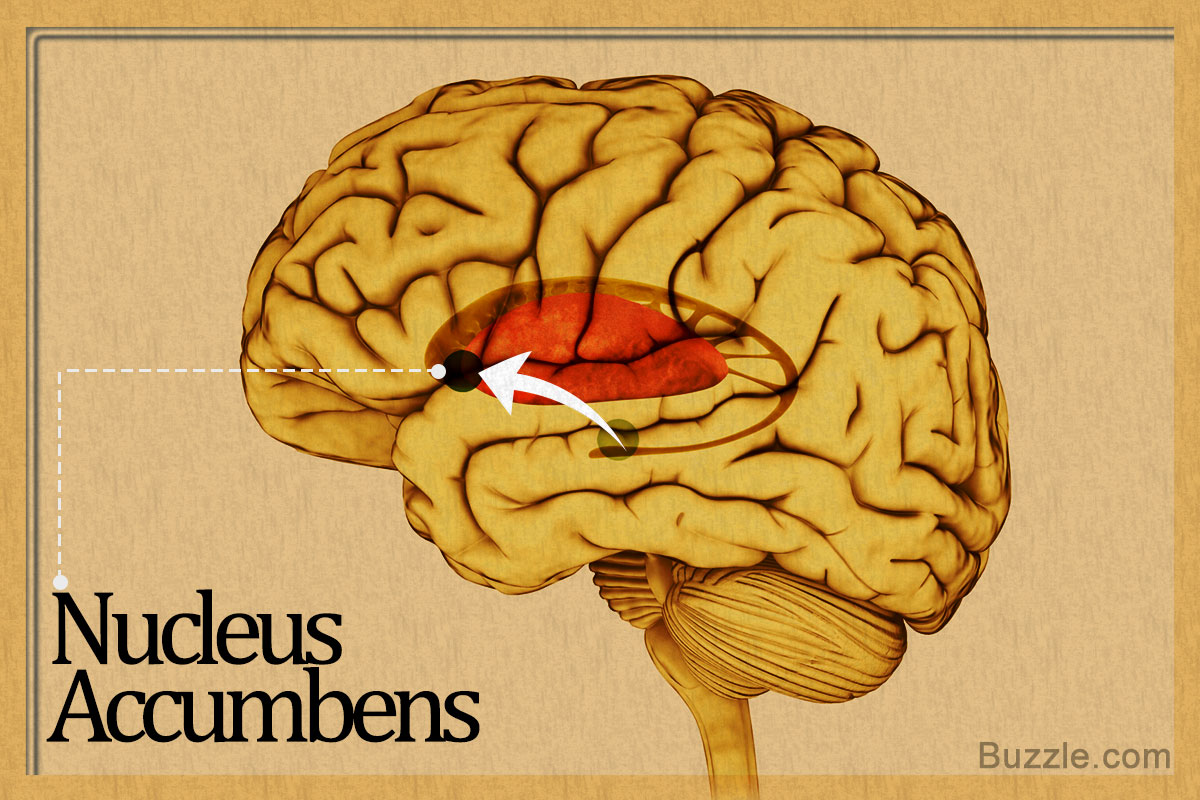
Image result for nucleus accumbens
https://bodytomy.com/structure-function-of-nucleus-accumbens
Results showed that there is a positive correlation between nucleus accumbens activation in response to receiving a reward and the average amount of alcohol consumed per night. The study also demonstrated that testosterone levels from the first time point could help to predict alcohol use at the second time point, however, the nucleus accumbens activation at the first time point did not predict alcohol consumption at the second time point.
To conclude, the researchers state that there is a relationship between real-world risk-taking behavior and brain activation to rewards. They also mention that based on the findings that testosterone levels can be predictive of alcohol consumption in the future, it should be looked at how testosterone levels have an impact on brain development and how these combined impact real-life risk-taking.
Article 3:

The authors begin by stating that adolescence is a time of development and risk-taking. They then mention the nucleus accumbens, and how it is a crucial area of the brain involved in the brain’s reward circuitry, specifically during adolescence. However, the relationship between the nucleus accumbens activity and risk-taking is not well understood. One factor they discuss that might help explain the relationship between the two is testosterone levels. Another factor they mention is individual differences in risk-taking behaviors. This longitudinal study was designed in order to test the relationship between nucleus accumbens activity to rewards, pubertal development, and risk-taking behavior. Participants were from the age of 8 to 27, and participated in multiple tasks. There was a gambling task which involved winning or losing money, a balloon analog risk task (BART) which corresponded with real-life risk-taking behaviors, a Behavior Inhibition System/Behavior Activation System (BIS/BAS) questionnaire for self-reported risk-taking tendencies, a Pubertal Developmental Scale, and testosterone levels were measured through saliva.
Results helped to confirm that there is a peak in nucleus accumbens activation in response to rewards, which had been identified in earlier studies. This is seen to be associated with a structural change in the volume of the nucleus accumbens. Results from this study have also concluded that pubertal changes begin earlier in girls than in boys based on self-reported information, and a serious increase in testosterone is seen in boys around age 10 as compared to a moderate increase in girls. When assessing risk-taking in individuals using the BART task, there was a peak in adolescence, which was also seen in previous studies. However, when measuring risk-taking through a self-assessment, there was no change over age which could possibly be due to individual differences aside from age. Self-reported risk-taking might just show the risk taking tendency of the individual, not how it changes over time, while using the BART to measure risk-taking shows when individuals are more likely to make risky decisions. The researchers also found that individuals with higher BAS scores over time had greater increases in nucleus accumbens activity, so the differences in self-reported risk-taking correlate with activity in the nucleus accumbens. Lastly, they found that elevated nucleus accumbens responses to rewards were related to increases in puberty and higher testosterone levels.
The authors conclude by saying that future research is needed in order to determine factors that lead to a stabilized response to rewards in adulthood. Having this information may be able to help more individuals control their risk-taking tendencies and make safer decisions.

References


Tuesday, May 7, 2019

Motivational Systems in the Adolescent Brain

By Amna Tahir, Neuroscience, 2021

Motivational systems in adolescents can help drive their behavior in different circumstances. Different parts of the brain are involved in motivations and the effect in adolescents is different from that of adults. I chose this topic because motivational systems play a large role in the life of an adolescent. 

Davidow, J.Y., Foerde, K., Galván, A., and Shohamy, D. An Upside to Reward Sensitivity: The Hippocampus Supports Enhanced Reinforcement Learning in Adolescence. Neuron, Volume 92. (2016). Pages 93-99. Retrieved from https://www.sciencedirect.com

Davidow, Foerde, Galván, and Shohamy used a task that combined reinforcement and probability to find a link between learning and memory in situations where rewards were involved. They were able to find that the hippocampus was influenced by the presence of a reward and so it would affect how an adolescent could learn from experience. Using an fMRI, the researchers found there was a strong link between reinforcement learning and episodic memory. Episodic memory is the ability to recall a specific part, or “episode”, of a person’s past.


In the experiment, there were two parts; the learning phase and the memory test. In the learning phase, participants had to press a button to predict where they thought a butterfly would land and would gain probabilistic reinforcement and a photo of an object. In the memory test, the participants would see a picture of an object and would then have to decide if they thought the photo was old or new. Then, they would rate how sure they were in their decision. They were able to find, using these tests that adolescents connected their episodic memory to their reinforcement learning to get better results for positive outcomes rather than negative outcomes.


Somerville, L.H, and Casey, BJ. Developmental neurobiology of cognitive control and motivational systems. Elsevier, Volume 20. (2010). Pages 236-241. Retrieved from https://www.sciencedirect.com


In this article, the Somerville and Casey begin by writing about the forms of cognitive control. One form is being able to go against the temptation to achieve a long-term goal. While this form of control was considered to increase linearly, it was found to be decreased in the presence of a reward. For example, in gambling tasks, adolescents were found to make riskier gambles in comparison to adults. This was because there was an increase in the sensitivity to rewards in adolescents. The sensitivity to rewards peaked between the ages of 14-16 and then would decline, which explained why the adults were less likely to make the same risky decisions.

With the increase in sensitivity to rewards, the adolescent brain was found to also be at an increased risk for cognitive control capacity to be lowered depending on how much attention or suppression the tasks would require. Another thing mentioned in this article was the relationship between incentives and cognitive control. When it was found to be better for adolescents to suppress their response to the incentive, their cognitive control would suffer.


Galván, A. (2017). Motivational Systems. The neuroscience of adolescence (pp. 151-178). Cambridge: Cambridge University Press. https://www.cambridge.org/


Galván begins by explaining a reward is any stimulus that an organism will find to be pleasurable. However, to find the stimulus rewarding, there has to be a change in how the organism will respond to the stimulus and how the information from the stimulus is processed in the brain. She then explains the importance of the neurotransmitter Dopamine in the reward system. In rats, she talks about how the release of dopamine increases in adolescence when stimulates by changes in the environment or pharmacologically. There is also a lot of neurocircuitries involved in reward processing, especially in areas where there are plenty of dopamine-releasing neurons. A part of this neurocircuitry network that is involved in the reward system is the ventral striatum. This part of the brain is what allows an organism to analyze and respond to the reward.

After explaining how the reward pathways work, Galván explains different studies done focusing on reward systems. One of which is the MRI studies. In these studies, the researchers were able to find that around age 10 in females and 14 in males, the cerebral’s volume increases and at age 8 in females and 10 in males, the amount of grey matter in the brain peaks. In fMRI studies, the researchers were able to see how the reward system affected the brain as it happened. When providing an incentive, the striatal regions of the participant’s brain were activated. Lastly, Galván addresses the good and bad purposes of risk-taking and the rewards it provides in adolescents. A good role rewards play in adolescents is how it helps in learning. In risk-taking behaviors, adolescents would perform better when the reward was higher. This helped in facilitating learning.

Sunday, May 5, 2019

Galván’s Introduction to Adolescence: The Relationship Between the Developing Brain and Behavioral Expression

by Kaiya Case, Kenyon College, ‘22

The following post is an annotated bibliography reviewing three separate scholarly articles, all rooted in the concept of adolescent neurological development as it translates into functional behavior. Stemming from key adolescent tendencies which Adrianna Galván touches on in the first few chapters of her text The Neuroscience of Adolescence, the studies detailed examine particular manifestations of impulse control, risk-taking, and the progression towards independence.


1. Article from the “further reading” suggestions at the end of the chapter: Casey, B.J. (2015). Beyond simple models of self-control to circuit based accounts of adolescent behavior. Annual Review of Psychology, 66, 295-319. Retrieved from: https://www-annualreviews-org.libproxy.kenyon.edu/doi/10.1146/annurev-psych-010814-015156
This article (recommended at the end of chapter one) discusses many of the same adolescent tendencies and related neurological models brought up by Galván, namely that of increased impulsiveness and experimentation. Though adolescents are physically in their near ‘prime’ in many ways, Casey first notes that their diminished self-control and inhibitions lead to increased mortality (specifically a 200% increase in preventable deaths) throughout such a challenging time of multi-leveled change. There exists within the adolescent brain a seeming inconsistency between increased “sensation seeking” but also the peak of anxiety and mood disorders. Casey points out the semi-hypocrisy of the negative, ‘defective’ connotation with adolescent tendencies for acting up. The brain has a lot to accomplish in adapting to drastically and rapidly changing both internal and environmental factors.
This article outlines two major approaches to understanding adolescent neuroscience and behavior: 1. “Translation,” which works across species uncovering evolutionarily-grounded behaviors. For example, all mammals exhibit patterns for increased interest in novelty and exploration as well as peers over parents during the adolescent period. These prove adaptive functions for reproductive success as steps towards independence and self-sufficiency, allowing for improved resource acquisition. 2. “Transition,” which examines the specific development between the stages of childhood, adolescence, and adulthood.
Casey also touches on the “hot” and “cold” brain systems described briefly by Galván, where adolescent neuroscience is considered through the lens of active response to surrounding events (hot) vs. implicit mental planning and calculation (cold) in a ‘dual-system model of willpower.’ Puberty amplifies signaling in the hot system, which is likely responsible for disrupting the cold system, emphasizing immediate over delayed reward. In addition to the two system concept, there are three key interconnected brain areas mainly involved in self-control: the amygdala, prefrontal cortex, and ventral striatum. During adolescence, temperamentality increases especially in regards to social cues, which results in less caution when it comes to motivated behavior. Casey cites a number of studies dealing with such behavior, including one that showed more risky gambling choices in adolescents relative to adults, and another reporting a dulled ability to suppress responses toward an unexpected social cue. He also talks about control in regards to perceived threats. Despite the cultural association with adolescents thinking themselves invincible, the opposite has revealed itself in a number of ways such as adolescent overestimation of danger and fatality relative to adults. While adolescents can properly appreciate consequences, they are more susceptible to getting wrapped up in the heat of the moment, with social factors and increased emotional charge fueling the fire.


2. Empirical article published in the past four years: Takamura, T., Nishitani, S., Suegami, T., Doi, H., Kakeyama, M., & Shinohara, K. (2015). Developmental changes in the neural responses to own and unfamiliar mothers smiling face throughout puberty. Frontiers in Neuroscience, 9. https://doi.org/10.3389/fnins.2015.00200.
With its focus on the relationship between mother and child, I chose to examine this article due to the central definition provided by Galván in The Neuroscience of Adolescence that the adolescent period ends roughly when the individual establishes independence from parental figures. Takamura et al. reinforce the importance of early, positive mother-child connection in building social relationships with others in all different ways later in life This is especially significant as peer interaction becomes much more prevalent during adolescence, yet the parent-child bond is classically known to shift in dynamic at that same time.
The study explicated in this article compares the neural response of males at three different developmental stages throughout puberty to a video of their respective mothers’ smiling. The sample of boys was split roughly into thirds between those just pre-puberty, near the height of puberty, and those who recently exited the pubertal phase. Response was measured specifically in the anterior section of the prefrontal cortex, and weighed against the neural response induced by the sight of an unfamiliar mother’s smiling face. It was found that the right inferior and medial parts of the anterior cortex would activate in those pre-puberty, while the left inferior, medial, and superior parts would light up in the mid-puberty group. Researchers concluded that this signified feelings of empathy, developed by supportive memory traces of maternal connection. Post-puberty demonstrated a lack of active response, indicating decreased interest in and reliance on parental figures.

3. Supplementary article: Galvan, A., Hare, T., Voss, H., Glover, G., & Casey, B. (2007). Risk-taking and the adolescent brain: Who is at risk? Developmental Science, 10(2), F8-F14. Retrieved from: http://search.ebscohost.com.libproxy.kenyon.edu/login.aspx?direct=true&db=mnh&AN=17286837&site=ehost-live.

Galván also talks a great deal in her introduction to adolescence as a whole as well as the concept of puberty about the idea of risk-taking as it has been traditionally associated with the adolescent stage. This empirical article (where Galván herself is involved as one of a number of responsible researchers) begins by noting the individual differences in impulsivity despite an overall tendency towards it and assumed cultural connection. While neurological reward-anticipation has been linked to risky behavior, and specifically greater nucleus accumbens (part of the ventral striatum) activity has been demonstrated in adolescents in comparison to their child and adult counterparts, this study strived to determine (over different developmental stages) whether accumbens activity directly correlates with the likelihood to undertake risks.
Galván et al. tested this central question through the use of fMRI conducted on participants ranging from child to adult, while following a certain version of the ‘Cognitive Appraisal of Risk Activities’ to assess how each individual weighed possible risks and consequences in regards to a given situation. While adults and adolescents indicated an association between accumbens activity and both negative and positive perceived consequences of risky behavior engagement, children did not. On the other hand, children and adolescents associated anticipated negative consequences with logically less engagement in risky behavior, but the anticipated pitfalls did not significantly sway the likelihood for engagement in adults. Whether an individual will perceive the consequences of an action as negative or positive is linked to both accumbens activity and their likelihood of engaging in risky behavior, and that proved true across all developmental stages. The researchers deduced that a change in the anticipation of risky behaviors’ consequences could therefore form the basis for the adolescent tendencies towards risk-taking, with the short-term benefits (such as peer admiration and overall social status) outweighing for them the potential long-term negative consequences. Additionally, as far as individual variation goes, case-by-case differences in consequence perception could determine whether the adolescent actually chooses to engage in the behavior.


References:

Casey, B.J. (2015). Beyond simple models of self-control to circuit based accounts of adolescent behavior. Annual Review of Psychology, 66, 295-319. Retrieved from: https://www-annualreviews-org.libproxy.kenyon.edu/doi/10.1146/annurev-psych-010814-015156.
Galvan, A., Hare, T., Voss, H., Glover, G., & Casey, B. (2007). Risk-taking and the adolescent brain: Who is at risk? Developmental Science, 10(2), F8-F14. Retrieved from: http://search.ebscohost.com.libproxy.kenyon.edu/login.aspx?direct=true&db=mnh&AN=17286837&site=ehost-live.
Galván, A. (2017). The Neuroscience of Adolescence. Cambridge: Cambridge University Press. (Chapter 1: “What is Adolescence?” & Chapter 2: “Puberty”)
Takamura, T., Nishitani, S., Suegami, T., Doi, H., Kakeyama, M., & Shinohara, K. (2015). Developmental changes in the neural responses to own and unfamiliar mothers smiling face throughout puberty. Frontiers in Neuroscience, 9. https://doi.org/10.3389/fnins.2015.00200.