Sunday, May 5, 2019

Position Paper: Sexual Education: A Necessary Aspect of Development

by Andres Tuccillo, 2022

In this position paper I will show that a comprehensive sexual eduction program is necessary for the healthy sexual development of adolescents. Sexual development is often an overlooked and demonized aspect of adolescence. The aim of this paper is to rectify that assessment by explaining how the literature substantiates my claim above: sexual eduction program is necessary for the healthy sexual development of adolescents.


Sexual Education: A Necessary Aspect of Development


No person can deny that adolescence is a transformative stage in neurological and physical development. The skills and functions needed to live and interact successfully in society are perfected over this period. Evolutionarily, one of the most, if not the most, important of these developmental hallmarks is the development of sexuality. Sex and romantic relationships are some of thes most important aspects of adulthood. Not only is it, evolutionarily speaking, the major drive of life, but also it has important and undeniable social importance. To prepare for this inevitable aspect of adulthood, the human body goes under many changes during adolescence. However, there is so much sexual knowledge that one needs to know to participate in sexual activities healthily and effectively that are not innate. Many of the implications of sexual activity are not self-evident to adolescents. One needs to learn these implications from a secondary source. This is why a comprehensive sexual education program is necessary. Many people however do not agree with this. Many are proponents of “abstinence-only” sexual education programs. These programs do not teach adolescents the necessary skills that they will need to know to live in a sexually active society; they only try to convince adolescents to never have sex. But this is a fantasy. By nature, adolescents are more prone to risk-taking than any other age group. If they are not taught about sex correctly, they will make the wrong desisions and have to deal will devistating conciquences. Thus, it is my belief that sexual education should be based on guiding adolescents through the complexities of sexual encounters (STIs and HIV, birth control, sexual orientation, etc.), not attempting to prevent them form having any sexual encounters in the first place.    
However, before one can make a judgement on what sexual education should entail and to what extent it should be implemented, one must first understand the neurological processes that occur which cause and influence an adolescent's sexual development. Firstly, one must understand that the development of sexuality started as early as conception and continues until death. However, self-awareness of one’s sexuality does not evolve until childhood (Kar et al. 2015). This increase in sexual awareness is a normative process that has many different factors associated with it. Biological, psychological, and social (or cultural) factors are all important in the development of sexuality in adolescents (Kar et al. 2015). Firstly, the major biological factor the stimulated of the reward system in adolescents. Sex is seen as a very rewarding expirience. When an adolecent comes of age and goes through the complex process of pubery, sex has been forgien to them. Therefore, when they are finally able to understand hormonally the essence of sexual action they want to be involved romantically with another person (Suleiman & Harden 2015). Brain imaging research has shown that romantic and sexual love or emotions are goal-oriented motivations and thus, activates dopamine-rich reward processing systems (Suleiman et al. 2015). This wish to become romantically involved is increased due to the fact that adolescents have a hypersensitivity to not only circumstances that would make them motivated, but the feeling of fulfilling a goal or gaining a reward.
The connection between the reward-system of the brain and sexual maturity is further shown through a number of neurotransmitters and hormones. Firstly, gonadal hormones, which are partly a cause of the onset of puberty (along with the hormone cortisol) (Kar et al. 2015), have been known to affect the reward processing system. Furthermore, testosterone levels have also been recorded to increase when reward-related brain activation has also become more prevalent (Suleiman et al. 2015). This connection between the hormones that signal and contribute to adolescents going into sexual maturity, and an increase in the activation of the dopamine pathways (mainly the Mesolimbic Dopamine Pathway) proves that sexual and romantic experiences hijack the dopamine pathway (Suleiman et al. 2015). Moreover, the body has a clever way of formulating and regulating the release of dopamine. When dopamine is released during a romantic or sexual encounter, oxytocin is released as well (from the Posterior Pituitary Gland). The co-release of oxytocin with dopamine prevents the development of tolerance to these neurochemicals. This co-release also over time leads to greater and more stable release of dopamine and thus fosters a long term bond between people (Suleiman et al. 2015). Thus, to form healthy relationships, adolescents need to experiment with relationships to be able to formulate this healthy co-release of dopamine and oxytocin. Therefore, after establishing that sexual experiences casue a realise of dopamine in the reward system, and knowing that adolecsents are more sensitive to reward-seeking, one can infer that sex (as well as drugs) is an expirience that adolecents will seek out. They will experiment with romance and sex, once their development has reach the stage to allow them to do so. Thus, because of the inevitability of this fact, it is imperative that adolescents are taught a comprehensive curriculum of sexual education to prepare them for this eventuality.   
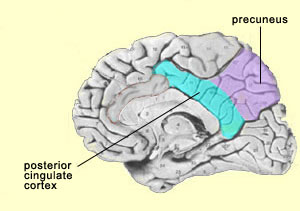
However, this experimentations has the possibility to be dangerous because of the involvement of peers. Peer development develops with sexual interest (Kar et al. 2015). This is not only because it is with peers that adolescents will look for potential sexual partners, but because peers will talk and compare sexual experiences. To gain admiration from one’s peers, that person wants to impress them with the level of sexual experiences they have had. Conversely, in most societies, the parents of adolescents do not want their adolescent children to have these experiences. A study conducted by Saxbe et al., explored the neural socioemotional processes attributed to who adolescent care most about pleasing; their parents or peers. The researchers began with the knowledge that social reorientation from parents to peers is normative in adolescents (Saxbe et al. 2015). However, the reachers wanted to know exactly what was happening in adolescent brains. The study was conducted with twenty-two adolescents (with the average age of 16.98) who underwent fMRI imaging while viewing brief video clips featuring thesleves, their parents or an unfamiliar peer. When viewing the peers compared to the parents, the adolescent brains were activated in the posterior cingulate cortex (PCC), pecunious, and the ventral striatum (area associated with reward processing) (Saxbe et al. 2015). Activations in these regions, especially the PCC and pecunious, suggests that neural correlates of the adolescent social reorientation from parents to peers, may be associated with adolescents' risk-taking behaviors and social relationships (Saxbe et al. 2015). Therefore, when adolescents move their attentions to peers, the amount of times that they participate in risky behaviors (alcohol use, committing crimes, and sexual activity) increases. Thus, the move to sexual activity is a normative and inevitable motion that adolescents will take. Along with sexual activity however, alcohol use is increased as well. By the age of 18, 47% of Amerrican teens have had sexual intercorce; 41% of those do not use condoms, and 22%  report substance abuse. (Ewing et al. 2016). The use of alcohol (or any substance) paired with sexual activity may lead to unintended health consequences such as STIs or unplanned pregnancies (Ewing et al. 2016). The response of schools and parents should not be to try to push students away from sexual activity then, but instead they could concentrate on teaching them the information that is stated above, and much more. The fact of the matter is (as is already established) that because of the biology of adolescence, they will have sex regardless of what their parents or other adults tell them. So, by not educating them about the dangers above, they are more likely to make those very same mistakes.
However, despite the neuroscience above, many parents and educators do not wish to implement a comprehensive sex-ed program. They have many misconceptions about sexual education and the neuroscience behind it. These misconceptions lead them to make misinform decisions about the nature of sexual education, which harm the adolescents that they attempt to protect. One common misconception is the belief that sexual activity outside of marriage has harmful psychological and physical effects. Since there is a lack of human research on this issue, one must look to animal literature. Neuroimaging of prairie voles show that the neural circuits involved in monogamous pair bonding (for voles don’t marry, but they do have strong mating pairs) are those related to the processing of rewards and social interactions. Also similarly to humans, dopamine and oxytocin has been found to be involved in establishing long-term pair bonds in voles (Suleiman et al. 2015). Thus, the neurocircuitry of those voles who pair bond is different than those who do not. Many proponents use this research to prove abstinence until marriage. However, there is a distinct distinction that must be made. Marriage is a social and legal construct. The literature described above may explain intriguing distinctions between romantic and other types of love, there have not been neural correlations uncovered which explains the distinction between married and unmarried love. It is important to note that marriage does not always lead to lifelong romantic bonding. People get divorced, marriages are arranged, and bad marriages can lead people to poor health (Suleiman et al. 2015). Simply, there is no biological difference between marital sex and marital sex.
Moreover, there is a misconception about what should be taught in sexual education programs. Abstinence-only education teaches about the emotional and physical harm that comes with casual sex. Ever since the outbreak of HIV/AIDS, sexual education has become more prevalent but has followed the model of “abstinence-only” (Galván 2017). Such programs concentrate only on the consequences of unprotected sexual intercource, such as STIs and unplanned pregnancies. Despite the importance of these health issues, they are missing large portions of necessary sexual education. Comprehensive programs aim to delay the participation of sexual intercouce, helping individuals avoid STIs and unplained pregancies, improve sexual decision making (not using alcohol or substances before having sex), and increase the use of contreceptives (i.e. condoms) (Suleiman & Brindis 2014). Sexual education can also focus on the positive and pleasurable aspects of sex. Sexual experiences are an important part of development, and adolescents should know that it can be a pleasurable action when done correctly. However, the majority of sexual education programs are missing aspects that relate indirectly to sexual activity. To be truly comprehensive, a program need to incorporate these topics: neuroscience of sexual development, interpersonal relationships, body image, intimacy, and gender roles (Suleiman & Brindis 2014). It is also impotant to note that adoelcents should not be told that sex is risky. Although risky behaviors may be motivated by sexual contexts, sex itself is not a risky action (Suleiman & Harden 2015). When given adequate access to contraceptives and sexual education, most teenagers are able to have sex with limited negative concequences (Suleiman & Harden 2015). Many of the negative consequences can surely be negated by more comprehensive sexual education. Sexual violence and abouse (also including coercion) is a biproduct of a lack of sexual knowledge (Suleiman & Harden 2015). Media, expecially pornography, depicts sex as an action of domination which promotes this trend of sexual violence. However, when proper sexual education is introduced, this fantasy is pulled away and adolescence begin to understand the real social implications of sex (Kar et al. 2015). This trend can also be seen in alcohol use during sex. When taught about the dangers of mixing alcohol and sexual intercourse, adolescents have been shown to decrease such actions (Ewing et al. 2016). What is infact dangerous is that sexual violence, substance use diring sex, the lack of contreceptives, etc., are increased when adolescents are not exposed to comprehensive sexual education programs.
  Despite all of the literature that is currently scattered all over the internet and many neuroscientific journals, comprehensive sexual education programs are not the accepted norm. Only twenty-two (out of fifty) states and DC mandate sexual education (Galván 2017). Also, 8 of those states require the program to be inclusive of all cultures and not be biased, while 2 states prohibit religion to be stressed. Therefore, 48 states concentrate on a topic that has no connection to sexual experiences while only 12 states are mandated to include sexual orientation (a topic which has great implications to sexual experiences) in their education programs (Galván 2017). These statistics show exactly why adolescents are the only segment of the population for whom acquisition of STIs/HIV is not decreasing (Ewing et al. 2016). Adolescents are not being taught sexual education properly. If this trend of “abstinence-only” sexual education is not giving adolescence the ability to experiment with romantic and sexual relationships in a healthy way. Our society needs a universal comprehensive sexual education program. The literature and research is out there but many in our government and society do not want to change the way sexual education is approached because of misguided stubbornness. Sex is an inevatible, healthy, and important part of life. It should not be hidden away. It should not be misrepresented. It needs to be taught with a great deal of transparency. Only then will adolescents have the skills to live a healthy sexual life.


Work Cited
Ewing, S. W., Ryman, S. G., Gillman, A. S., Weiland, B. J., Thayer, R. E., & Bryan, A. D. (2016,
January 20). Developmental Cognitive Neuroscience of Adolescent Sexual Risk and Alcohol Use. Retrieved April 28, 2018, from https://www.ncbi.nlm.nih.gov/pmc/articles/PMC5858879/  
Galván, A. (2017). The Neuroscience of Adolescence. New York, NY: Cambridge University
Press.
Kar, S. K., Choudhury, A., & Singh, A. P. (2015, April 8). Understanding normal development of adolescent sexuality: A bumpy ride. Retrieved April 28, 2019, from https://www.ncbi.nlm.nih.gov/pmc/articles/PMC4477452/
Saxbe, D., Del Piero, L., Immordino-Yang, M. H., Kaplan, J., & Margolin, G. (2015, December
10). Neural correlates of adolescents’ viewing of parents’ and peers’ emotions: Associations with risk-taking behavior and risky peer affiliations(Rep.). Retrieved April 28, 2019, from HHS Public Access website, from https://www.ncbi.nlm.nih.gov/pmc/articles/PMC4607542/
Suleiman, A. B., & Brindis, C. D. (2014). Adolescent School-Based Sex Education: Using
Developmental Neuroscience to Guide New Directions for Policy and Practice. Springer Science & Business Media. Retrieved April 28, 2019, from http://www.schoolhealthcenters.org/wp-content/uploads/2014/03/Adolescent-Decisions-Suleiman-Brindis-2014.pdf
Suleiman, A. B., & Harden, K. P. (2015). The Importance of Sexual and Romantic Development
in Understanding the Developmental Neuroscience of Adolescence. Developmental Cognitive Neuroscience. Retrieved April 28, 2019, from https://labs.la.utexas.edu/harden/files/2013/05/Suleiman-Harden-DCN.pdf
Suleiman, A. B., Johnson, M., Shirtcliff, E. A., & Galván, A. (2015, July 7). School‐Based Sex
Education and Neuroscience: What We Know About Sex, Romance, Marriage, and Adolescent Brain Development. Retrieved April 28, 2019, from https://onlinelibrary.wiley.com/doi/full/10.1111/josh.12285


Relevant Images:

Mesolimbic Dopamine Pathway & Ventral Striatum:

Image result for Ventral Striatum and the Mesolimbic Dopamine Pathway


Posterior Pituitary Gland (produces oxytocin):
Image result for posterior pituitary


Posterior Cingulate Cortex (PCC) & Pecunious:

Image result for Posterior Cingulate Cortex

Saturday, May 4, 2019

Position Paper: What Role Should Age Play in Courts?

by Callie Toal, 2022

I chose this topic because I am very interested in law and neuroscience, and I had no idea that they could be combined! After analyzing the new data, I believe that adolescents, no matter how horrible the crime, should not be tried as adults and should not be sentenced to harsh punishments like life with no parole or the death sentence.   

What Role Should Age Play in Courts?
Modern adolescent neuropsychology has many controversial issues that are now being addressed due to advances in technology and science. One of these issues that had many theories surrounding it, but not much information to support these theories, is the role of age when convicting juvenile offenders as adults. In the article by Jones and Shen “Law and Neuroscience in the United States” nueroscience is being used more frequently as evidence within the courtroom. In 2010 the US Courts saw the first case using an fMRI as evidence. This same concept is now being applied to cases involving juvenile offenders. The court system has a long-standing history of trying juvenile offenders as adults for particularly heinous crimes such as murder or sexual assault. These juveniles are tried and convicted in the same way adults are, but neuroscience is now questioning if this is the appropriate way to handle these crimes. In order to understand this, perspective exploration of the typical developing adolescent brain needs to take place, which explains adolescent risk taking behavior, impulsivity, and high influence of peers. After examining the neuroscience behind their behavior it will be important to examine how the courts legally define an “adult” in order to make criminal convictions of juvenile offenders. Finally, I will explain how this evidence supports my opinion that juvenile offenders cannot be tried as adults due to their brain development, and the age of legal adulthood should be raised based on the evidence of these studies.
Examining the brain of an adolescent who is developing into an adult, three segments of brain structure and function help to explain their behavior: the limbic system, the prefrontal cortex, and neurotransmitters. According to the research done by Arain et al. in the “Maturation of the Adolescent Brian” the limbic system in the brain consists of the amygdala, hippocampus, and hypothalamus. These parts of the brain influence emotion and motivation in relation to survival, which is more simply described as the part of the brain that controls the fight or flight response. Within the limbic system there is control of both negative feelings such as fear or anger; and positive feelings such as eating or sex. This part of the brain also plays a large role in memory storage directly related to memories with strong emotions tied to them. When looking at the adolescent brain it is clear that they utilize the limbic system when deciphering others emotions as well as during interactions with others. They also use this part of their brain more frequently than adults when it comes to decision-making. During adolescence there is also significant change in the prefrontal cortex as explained by Steinberg in his article “Commentary: A Behavioral Scientist Looking at the Science of Adolescent Brain Development.”. The prefrontal cortex is located in the front of the brain and controls primary executive functions. Executive functions are higher-level cognitive processes such as decision-making, problem solving, and impulse control. During adolescence there is a large shift in the prefrontal cortex from primarily grey matter to white matter. This large shift within the prefrontal cortex allows for more connectivity between this part of the brain and other parts of the brain such as the limbic system, but the lack of development in this area leads to more risk taking behavior, impulsivity, and lack of self-regulation. Finally, the neurotransmitters dopamine and serotonin are affected during adolescent brain development. Dopamine is a neurotransmitter involved in the sensations of pleasure and pain. Serotonin is a neurotransmitter involved in mood alterations, anxiety, impulse control, and arousal. During adolescence levels of dopamine and serotonin decrease greatly leading to mood swings, a lack of ability to regulate emotions, and a lack of impulse control.
When taking into account these three parts of the brain most affected during adolescence as compared to adults there is a clear understanding of the type of behavior to be seen during adolescence. The first behavior most commonly seen during adolescence is risk-taking behavior. Due to lack of development in the prefrontal cortex the risk taking behavior is extremely escalated. This lack of development in the prefrontal cortex is only enhanced by the decrease in serotonin and dopamine. The risk taking behavior within adolescents serves both a positive and negative purpose. Adolescent risk taking allows them to put themselves in uncomfortable situations that can lead to new skills and prepare them for the challenges that await them in their future. This explains why teens take risks, but some of the risks that they take can affect their life more deeply. Risk taking behavior becomes especially dangerous for adolescents because they lack the executive functioning skills in the prefrontal cortex to assess how risky a situation actually is. As explained in an article written by Steinberg “Risk Taking in Adolescence” it is clear that even when teens are able to identify that they are in a situation that could cause risk, the communication between the limbic system and prefrontal cortex leads to a desire to meet the limbic systems need for pleasure negating the risk factors. The same connection between the prefrontal cortex and limbic system can also account for adolescents need for peer influence involved during risk taking behavior. In his article “A Behavioral Scientists Looks at the Science of Adolescent Brain Development” Steinberg explains that when looking at brain images adolescents the socio-emotional reward regions of the brain are activated more strongly when making risky decisions in front of their peers rather than alone. This is a direct connection to the emotional arousal and approval that adolescents get from their friends. Within the limbic system that adolescents utilize more frequently there is a need for pleasure leading to this approval from their friends.
To date these neuropsychological arguments are beginning to be used more frequently in the court system. In the article “Neuroscience and Juvenile Justice” by Aronson the use of this neuroscience is explored. In the case Roper v. Simmons is Washington, D.C. the legal defense argued that the death penalty for the 17 year old being tried for murder was cruel and unusual punishment based on the evidence that adolescents are not fully in control of their behavior at this age due to the brain structure still being developed. They were attempting to differentiate between adults and adolescents by using neuropsychological evidence. This court case highlights another important issue, which is when do adolescent’s transition to adulthood. Several articles mentioned previously in this paper argue that the brain is still developing till age 25 leading to risk taking behavior and lack of impulse control similar to a 15 year old. According to research done by Cohen et al. in their article “When is an Adolescent an Adult? Assessing Cognitive Control in Emotional and Nonemotional Contexts” in brain imaging as well as brain function scans it is evident that 18-21 year olds showed similar emotional arousal to those within their early adolescence. Evidence such as this supports the increase in age of adolescence as neurochemically and structurally these “adults” show many similarities to their early adolescent counterparts. Casey et al. is leading a study to hone in on the adolescent mind, asking at what age do people gain the ability to control themselves in emotionally charged situations? To answer this question they placed 13 to 25 year olds into a brain scanner while asking them to do a task that required restraint. Specifically, they had to press a button if they saw a bored or scared face but they were told not to press the button if they saw a happy face. The twist was that subjects performed the task under three conditions: positive arousal, being told that they could be rewarded up to $100, negative arousal, being told that there could be a loud noise, and no arousal, where they were told nothing. The idea behind this experiment was that the first two conditions would create a sustained period of heightened emotion. This was inspired by the circumstances of criminal behavior because many crimes committed by adolescents are emotionally or socially charged situations. The key question being why, in the heat of the moment, under threat, do they pull the trigger, even when they know better? The results of her experiment involving negative stimulus was that 18 to 21 year old were less able to restrain themselves from pushing the button when there was threat of a loud noise than 22 to 25 year olds. However, this diminished cognitive control was no observed under positive or neutral conditions. Interestingly enough, under threatening conditions, the 18 to 21 year olds weren’t much better than teenagers. Moreover, the brain scanners revealed that areas in the prefrontal cortex that regulate emotion showed reduced activity, while areas linked to emotional centers were in high gear. What I took from this was that adolescents act on their emotions and in the heat of the moment because their prefrontal cortex is not developed enough to allow them to actually think through their decisions since their emotions are overpowering it. This explains why adolescents are more involved in risky behavior and are in jail.             
In order to get a full picture of the controversial topic of using neuroscience in law to differentiate adolescents from adults and increase the age of adulthood, it is important to have an understanding of the juvenile offenders this work is affecting. In an article written by Jerry Fagnan in The American Prospect there is exploration of this juvenile justice system and how “maturity” has been decided historically. This ability to try adolescents as adults became popularized in the 1970’s when there was a sharp increase in juvenile offenders. At that point in time the adolescent’s ability to be tried as an adult was made by the judge on a case-by-case basis with recommendation from social workers and previous offender history taken into account. This was the system that was deemed most appropriate, but due to new technological advances we are now able to see that there is a large difference in the brain chemistry and structure of a juvenile offender versus an adult offender. Essentially it only makes sense that we would not try juvenile offenders as adults because there is scientific evidence that proves they do not have the impulse control, executive functioning, or ability to make rational decisions that adults do. Furthermore, young adults who, based on scientific evidence, share a lot of the executive functioning of their early adolescents counterparts are also being tried based on their adult age. In his article “Neuroscience Is Changing the Debate Over What Role Age Should Play in the Courts” Tim Requarth tells the story of Antonio House, a young man who turned 19 two months before his conviction of two counts of first degree murder. Antonio, a teenage drug dealer for the gang unknown Vice Lords, was asked to be a lookout while his boss murdered members of their rival gang. He received the same punishment as his boss who actually organized and completed the murders. Fortunately, Antonio was able to utilize the same reasoning that is used for juveniles in the Supreme Court of Law for the first time in American Law. This result was thanks to use of the research that shows the adolescent brain is still developing into mid twenties. These two articles show the climate of the United States Juvenile Justice and Young Adult Justice system is changing, which is thanks to the neuroscience work being done by researchers around the country. House’s case is the first to successfully apply the Supreme Court’s reasoning about adolescents who committed a crime after age 18.
Based on all of this information, I agree with the fact that juvenile offenders should not be tried as adults due to their brain development. However, in the case of young adults between the ages of 18 to 25, is a bit of a gray area so more research needs to be done to support that they have similar brain chemistry to young adolescents. Additionally, I think that the age that we classify legal adulthood should be raised because we can clearly see that people, even around the age of 24 or 25, have a more similar brain structure to adolescents than to adults. Convicted juveniles are not their fully developed selves yet and are clearly not capable of making the right choices all of the time due to the fact that their limbic system, the prefrontal cortex, which is involved in higher-level cognitive processes like decision-making, problem solving, and impulse control is not fully formed yet, so there is not as much connectivity between these parts of the brain which causes risky behavior and low impulse control. Additionally, adolescents levels of dopamine and serotonin are out of sync so they have difficulty regulating their emotions and have low impulse control, which is why they engage in risky behavior. Brain areas involved in reasoning and self control, such as the prefrontal cortex, are not fully developed until the mid 20s, a far later age than previously thought. Yet, brain areas involved in emotions such as desire, and fear are fully developed by age 17. In the article “Neuroscience is Changing the Debate Over What Role Age Should Play in the Courts” Casey et. al says that “this pattern of brain development creates a perfect storm for crime: Around the ages of 18 to 21, people have the capacity for adult emotions yet a teenagers ability to control them.”  On a similar but different note, raising the adult age makes perfect sense because, as Elizabeth Scott, a professor of law at Columbia University, put it best “People are not magically different on their 18th birthday. Their brains are still maturing, and the criminal justice system should find a way to take that into account.” In the case of Antonio House, I agree that they should utilize the same reasoning they use for juveniles in court regarding the new neuroscience data. This case will be a turning point in neuroscience as well as in American law. However, we have to be very careful that this new neuroscience evidence does not become the basis for an excuse of criminal behavior in adolescents. Particularly, researcher Steinberg says that “...The question is how culpable are they, and how do we punish them?” It is easy to forget that the legal definition of an adult is a cultural construct pieced together years ago, around the time when juvenile courts were first established so this cutoff has no real empirical basis. This neuroscience merely confirms what is already known: modern adolesce seems to be prolonged, with people completing school, establishing financial independence, and starting families at a much later age, so it only makes sense that criminals should go to adult prison at a later age as well.
Instead of punishing we should be helping these troubled adolescents; youth at this point in their lives are so impressionable. Due to the plasticity and executive functioning abilities in the brain, if we step in the first time juvenile offenders are convicted, we can rehabilitate rather than punish. As a result, legal experts and policy makers are beginning to reconsider how the criminal justice system treats this age range. For example, Governor Dannel Malloy of Connecticut, proposed raising the juvenile age to 20 and instituting alternative ways to deal with people up to age 25, such as keeping convictions for less serious crimes confidential and establishing a special young-offender prison whose primary focus is reform and reintegration of juvenile offenders. There are already some places in the US putting some of these alternatives into place.  In particular, the Brooklyn District Attorney’s Office, is starting a separate court system for ages 16 to 24. This court, beginning with low level offenses, has a dedicated judge, defense staff, prosecutors and social workers. Similarly, the San Francisco DA launched a similar program but focused more on felonies, including violent crimes. Both programs are working on an approach that takes developmental factors into account. On a different note, young offenders are entering an adult system, are often faced with harsh and protective and disciplinary measures like solitary confinement. Solitary confinement is often used to punish adolescents for misbehavior, to isolate them if dangerous, to separate adolescents vulnerable to abuse from others, and for medical reasons like suicidal ideation. However, research shows that solitary confinement can cause serious psychological and developmental harm to children, and can have a detrimental effect on their ability to rehabilitate. Adolescents kept in isolation lose touch with reality, and can develop identity disorders. Clearly, this punishment is more detrimental to adolescents than actually helping them. Instead, the Supreme Court emphasized the importance of treating young adolescents in the criminal justice system with special constitutional protections regarding punishment, and since solitary confinement is physically and mentally harmful to adolescents, many are calling for reform. Suggestions include increasing the number of trained supervised staff in facilities, like social workers and other mental health professionals. Additionally, providing adolescents with programs and activities in groups may also help development and rehabilitation. Research has also emphasized rewarding positive behaviour instead of punishing bad ones because adolescents crave rewards. Research has also linked the role of education to improved behavior and lower rates of delinquency among incarcerated youths. Education may improve rehabilitation efforts to assist youth in productive re entry into the community. All in all, because adolescents wrongdoings are often the product of immaturity, adolescent criminals may have a greater potential to reform due to brain's plasticity in this stage of life.
Works Cited:
Arain, M., Haque, M., Johal, L., Mathur, P., Nel, W., Rais, A., Sandhu, R., and Sharma, S.  (2013).Maturation of the adolescent brain. Neuropsychiatric Dis Treatment, 9, 449-461.
Aronson, J. (2009). Neuroscience and Juvenile Justice. Akron Law Review, 42 (3): 917 – 930.
Cohen, AO.,Breiner, K., Steinberg, L., Bonnie, RJ., Scott, ES., Taylor-Thompson,           KA., Rudolph, MD., Chein, J., Richeson, JA., Heller, AS., Silverman, MR., Dellarco,          DV., Fair DA.,Galván,  A., and Casey, BJ. (2016).  When Is an Adolescent an Adult?  Assessing Cognitive Control in Emotional and Nonemotional Contexts. Psychological  Science, 27 (4): 549 – 562. DOI: 10.1177/0956797615627625.
Fagnan, J. (2005).Adolescents, Maturity, And The Law.The American Prospect. Retrieved from             https://prospect.org/article/adolescents-maturity-and-law
Lawrence, S. (2007). Risk Taking in Adolescence: New Perspectives From Brain and Behavioral   Science. Current Directions in Psychological Science, 16 (2),55-59.
Lawrence, S. (2010). Commentary: A Behavioral Scientist Looks at the Science of Adolescent Brain Development. Brain Cognition, 72 (1), 160-164. doi: 10.1016/j.bandc.2009.11.003.
Pope, K., Luna, B., Thomas, C. (2012). Developmental Neuroscience and the Courts: How          Science Is Influencing the Disposition of Juvenile Offenders. Journal of the American    Academy of Child & Adolescent Psychiatry, 51(4): 341- 342.  doi: 10.1016/j.jaac.2012.01.003
Requarth, T. (2016). Neuroscience Is Changing the Debate Over What Role Age Should Play in the Courts. Newsweek Magazine.Retrieved from             https://www.newsweek.com/2016/04/29/young-brains-neuroscience-juvenile-inmates-       criminal-justice-449000.html
Muller , Robert T. “Rehabilitation Benefits Young Offenders.” Psychology Today, Sussex Publishers, 17 Sept. 2015, www.psychologytoday.com/us/blog/talking-about-trauma/201509/rehabilitation-benefits-young-offenders.


Thursday, May 2, 2019

Autism and the Development of Face Processing

by Callie Toal 
Kenyon College 
Freshmen 
I chose this topic because I find it really interesting that people with Autism process faces differently, its something I never thought of. My blog post is an annotated bibliography about the social brain, specifically autism. This article explores the differences of facial recognition and processing of people with autism.  


Golarai, G., Grill-Spector, K., & Reiss, A.L (2006) Autism and the development of face processing. CLinical Neuroscience Research, 6, 145-160.  Retrieved March 28, 2019 https://www.ncbi.nlm.nih.gov/pmc/articles/PMC2174902/


After reading the paper “Autism and the development of face processing” the concept that raises the most questions in my mind is atypical brain structure and chemistry from birth versus change in brain structure and chemistry over time. This does a thorough job in explaining the symptoms and behaviors of a person with autism. They explain that it is primarily a developmental condition that affects communication, behavior, and relationships. Throughout the article behavior associated with Autism Spectrum disorder are also listed such as lack of eye contact and lack of interest in social situations. Due to the association of these symptoms based specifically in facial recognition and facial expression processing, this article explores three areas of the brain that play a large role in facial recognition and processing of facial expression emotions.
   Golarai, Grill-Spector, and Reiss first explores the superior temporal sulcus (STS) that is the part of the brain associated with the recognition of visual signals relating to emotion and motion specifically in the eyes and mouth. The research in this article does point to a discrepancy in brain structure and function between neurotypical people and people with Autism.
   Golarai, et. al. explore the fusiform face area (FFA) that plays a large role in facial recognition. One interesting piece of research that is explained is the development of the FFA over time. The physical size of the FFA in the brain increases as children get older which correlates with the stronger ability to utilize facial recognition. When comparing the FFA in a person with Autism to a neurotypical person it was apparent that the FFA has increased activity in the brain of a neurotypical person.
   Finally, Golarai et. al. explore the amygdala, which is associated with response to faces, specifically those displaying fear. The research described indicates that there are discrepancies in both structure and function of the amygdala in people with Autism. The Amygdala is larger in people with Autism and when labeling faces with emotion the amygdala has lower activation than their neurotypical counterparts.
   All of this evidence shows that there is a large difference in the facial recognition and processing of people with Autism that is not only demonstrated by systemic behavior but actual brain structure and function. What this article does not address is the complex concept of the development of symptoms of autism versus the deficits one with autism is born with. All of the studies discussed in the article were done with young children or adults making it difficult to discern if this discrepancy in brain function and structure was caused over time by the behavior of someone with autism. For example, the research surrounding the FFA does show that even in neurotypical subjects the areas become larger over time. This indicates that due to the lack of eye contact and facial expression processing associated with Autism the FFA could have deficits that were not there at birth. Unlike the FFA the STS focuses more on the ability to track eye movement and facial movement. Again, people who are neurotypical did show a heightened ability to track eye movement associated with activation in the STS, but nothing about the development of this part of the brain suggests that this changes as people age. The research done thus far in this article into the area of facial processing and recognition in people with Autism is extremely helpful because it gives clinicians information on brain function that could help them to develop more supports to address the symptoms people with Autism face. It also is an important article because it begins the quest to continue to explore the cause and development of Autism. Additionally, a similar article by Kami Koldewyn and Nancy Kanwisher describe a study that shows that children with Autism Spectrum Disorder are impaired in face memory, but not face perception, leading them to conclude that the process is specific.  


https://www.ncbi.nlm.nih.gov/pmc/articles/PMC2174902/#R55


https://www.spectrumnews.org/news/face-processing-network-weaker-in-autism-scientists-say/